Undergrad Project: Reforming Education Reform
Why has education barely changed since the conception of education?
I wrote this years ago and may not necessarily agree with all of the points made, but I wanted to share my old works from school that isn't math or stats-heavy.
Written for UWP 104D at UC Davis in my fourth year, as a Google Site. That version needs a UC Davis sign-in, so the text is reproduced here: the original site.
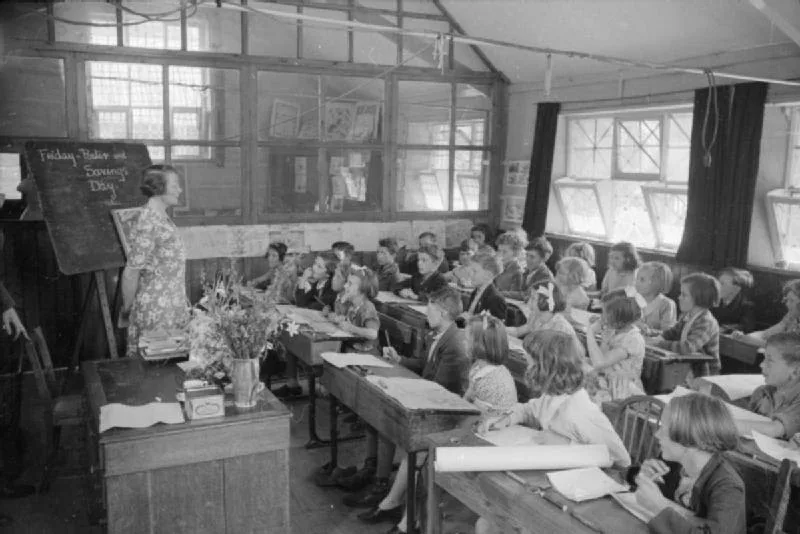
Education has barely changed in the last century.
Education reform has been a hotly debated topic since the conception of education. It's become a political issue although everyone should, in theory, have the same goals: to create a system that allows for everyone to have a proper, equitable education. That begged me to ask the questions: why has it been so difficult to make any progress in reforming our outdated education systems? How has education reform in the past decade succeeded, and what are the next steps to improving the education system for students to succeed at a higher rate?
I'm Thommas Phan. I'm a 4th year applied statistics major looking to work in education in the future. I've worked as a math and statistics tutor for basically half of my life now, and I always wondered why my tutoring seemed to be so effective for the students I've helped. It's not like I was doing anything special — for the most part I just sat down with them and helped them through their homework, or caught them up to where they should be with school. I finally started finding the answers to that question throughout my own higher education, and while researching what has been successful in education reform.
Long story short, the education system as we know it barely works.
Why even the most basic tutoring is effective
I'll begin this blog on education reform with my own experiences in the field. I'd like to establish, from observation and personal anecdotes, that children are naturally curious. If students are consistently failing, then it is not the students failing, but rather education failing them.
I found myself tutoring the most at the end of high school and early college days. I worked mostly in statistics and AP Calculus but branched out into more basic forms of math, specifically Integrated Math 1 and 2 and Algebra I and II, with Precalculus here and there. I'd love to give you a cliché story about how the students I worked with ended up having the "light bulb" illuminate above their heads all by themselves, but that wasn't the case. Truth was, the students and parents that reached out to me all desperately needed help. Most were either in danger of failing or C students looking to pass. Someway somehow I managed to help them get an A more often than not.
I don't want to pat myself on the back too much. I put a decent amount of effort into what I did, however. I worked with a lot of the math teachers at my high school to create a little study guide for every chapter with each of my students. I actually kept all of my calculus ones. They were these cute little packets with extremely simplified versions of the explanations in the textbook, as well as unfinished definitions and problems that I would have the student fill out while I talked to them. I stress this word, "talk," over the word "teach," because I focused on creating an environment where the student and I were just… talking. I never got to have that feeling with a teacher until I got into college and started to feel like the professor was talking to me instead of lecturing me. It's a neat feeling, and a lot easier to learn when you don't get that feeling of someone "yelling" in your ear about what you don't know.
Okay, so cool. I talked. It felt more personal and easy to understand. Unfortunately this won't translate well into a classroom of 45. I just wanted to mention that I think this method helped a lot of C-average students get an A in a class that is widely considered one of the most difficult.
I started going a bit above and beyond when teaching Calculus, however. Parents were paying me a lot (for the little 17-year-old I was) to make sure their kids did well. I felt a lot of pressure on myself to make sure they did. However, I think that basic tutoring would have worked close to as well. While these little graphics and packets I had kept the student's attention and made them motivated to learn, I felt like what mattered most was that they were learning in a different environment than the one they had in school. One that was willing to adjust to them.
That's the issue with our schools. They aren't willing to adjust — not the ones that I had the "opportunity" to attend, anyways. I was mostly a B and C student in high school and it convinced me that I was just a crappy student. Yet in college and university, I'd say I've done quite well for myself. Isn't it a shame that I spent most of my adolescence feeling like I was going to be a failure? Nowadays I feel like my voice is worth something. I have my name on a research paper, I'm currently working on a few more, and I feel like my grasp on numbers and statistics is as good as it's been in my academic career. I'd like for every student to have this feeling, given they're willing to work for it.
"The problem is that they aren't willing to work for it!"
Stop right there. Wrong. Objectively, subjectively, whatever word I want to throw around. Whoever is thinking this is just wrong.
Let me explain why.
Before I get into the nitty-gritty of what needs to be done, based on academic research, I'd like to provide one last anecdote. Have you ever hung out with a young child before? I'd bet that the most common word out of a child's mouth is "Why?"
Children are naturally curious. I'd describe it as frustratingly curious.

"Why do you have to go to work?" Well, I need to make money. "Why?" So I can pay the bills! "Why?" So that I can have electricity and water for my house. "Why?" Because I need these things to live, dear. "Why?"
I think you see where this is going, or where it isn't. Around the 10th or 20th "Why?" I myself begin to wonder "Why?" and start to think it'd just be easier to dismantle the entire system than it would be to answer that question. At some point in our education system, the student's beautiful curiosity of "Why?" becomes a disgruntled "Fine."
That's if we're lucky. Some students just say no and don't do their work, or drop out entirely. Easy to blame the student and call them lazy, but where does that get us?
What the research actually says
During my research, I came across a Time article written by Diane Ravitch, titled "The education reform movement has failed America. We need common sense solutions that work." It discusses the failure of the education reform movement, specifically the No Child Left Behind Act during the George W. Bush administration, which implemented poor strategies that were ultimately removed. But it wasn't just a failure in the Bush administration. (Ravitch, D.) Obama's Race to the Top, Bill Gates' Common Core standards, Trump's push for school choice — everything came out empty-handed.
I think Trump's campaign to allow for school choice illustrates perfectly why education reform hasn't worked. Trump stressed that parents should be able to choose what school their child goes to, because no parent should be forced to send their child to a failing government school. (Stoll, I.) (Skinner, R.)
He was entirely right for entirely the wrong reasons. No parent should have to knowingly send their child to a school where the odds are against their child's success. The solution, however, is not to just send them to a more successful school. That works up until the entire population of the US is trying to send their child to the Harvard-equivalent of a high school where the infrastructure allows for 1000 students.
If you ask why this isn't the solution, then you're asking the wrong questions. The policy for "choice" is very short-sighted and doesn't address the core issue: why are there failing government schools in the first place?
I think the best case to study in the past decade is how Common Core has been implemented. If you don't know, the Common Core State Standards Initiative is a push from 2010 that details what K-12 students throughout the United States should know in English and Math by the end of each school year.
Unfortunately the research I've looked at all concluded that there wasn't enough significant evidence to say the Common Core improved students' abilities, other than on the benchmark assessments for Common Core. It sounds great until you realize that these assessments are literally made to benchmark how well Common Core is being taught, not how effective Common Core is itself. (Stugart, M.)
This would be like teaching someone how to boil an egg and then asking them to boil an egg for you. Of course they'll pass that test. It doesn't necessarily mean that they've gotten better at cooking. We need to ask the right questions with our assessments. Are these standards actually effective for the students when they enter the real world? (Stugart, M.) We need to stop seeing if students can boil an egg. Cooking is bigger than boiling eggs. There's no assessment that can test every culinary skill ever. If that assessment did exist, it'd take longer than learning the acts themselves.
The same applies to students.
An assessment can only ask so much. Some students are fantastic at passing tests and some aren't. Naturally we rank individuals who are better above those that are worse. It's ironic because in my entire adult life people have told me my grades actually don't matter much. My ability to take tests is actually worthless in the real world.
Wait, what? So why the hell have I been learning exactly that for the past 20 years?
Because it's a system that doesn't adjust to you. It's a system that is easier to pay to fix the problems of later than it is to fix right now. It's a system that was made a very long time ago and it'd take way too much funding and creativity to touch it without any backlash. (Ravitch, D.)
Who a system is built for
The most powerful article I found, however, was actually not directly related to this topic. It asked the question, "What is the relationship between a student's gender and their science motivation?" It was a research study in Eurasia that looked into the issue that males seemed to try harder in science than females did in schools. The goal was to eliminate any systematic issues in the educational system that perpetuate this. They used cluster sampling of social cognitive motivation questionnaires and regression analysis of nearly a thousand students in grade school to study why the difference was so large between genders. They ended up concluding that having a lot of different methods of teaching science ends up pulling in as many students as possible, rather than catering to just one group of students. (Daher, W.)
I chose to mention this article because, while not 100% related to education reform, I believe that a discussion to change the current system to make it more equitable between the genders is also a necessary step for proper education reform. Even if a great education system were to be integrated into the school systems, if certain genders or races were pushed one way or the other, then I would have trouble calling it "great." While my paper aims to discuss methods of education reform to emphasize education more than grades, it also needs to mention that gender and race equity play a large role in it. If, for example, women did not like math in a new education system, then there are clearly failings within the system itself.
Why is it that nearly every scientist, mathematician, and writer belongs to the same dead-white-man category? Racists like to believe that it's because white people have superior brains, and sexists like to believe that men have superior brains. Contrary to their beliefs, I don't think we are actually that much different from one another. I believe the explanation is this: the education system designed by a white man will have the most white men succeeding in it.
Money, and where it doesn't go
The end goal for our school system isn't to have the one perfect system, because any single system will innately have sacrifices made. (Daher, W.) Our current system distributes funding to the richest neighborhoods while leaving schools in worse-off neighborhoods underfunded. (Morgan, I.) A report found that the highest poverty districts in the U.S. receive $1,000 less per student than the lowest poverty districts. This same study also found that districts that have the most students of color receive roughly $1,800 less per student than the districts that serve the fewest. (Morgan, I.)
This education system clearly has its flaws when it comes to equitable funding. It also relies far too much on standardized tests and not enough on hands-on learning. However, if we addressed these issues in a new system, I'm sure another few glaring issues would appear and the parents would demand we go back to the old ways.
Figures from Is School Funding Fair? A National Report Card, 7th edition, by Bruce D. Baker et al. Click any one to read it full size.
Looking at these graphs from Is School Funding Fair? by Bruce D. Baker, we can tell that school funding is NOT fair. Students in poverty in New York get three times the amount of funding as those from Idaho, for example. We can also see that the fiscal effort to help students did not correlate well with how much the personal income of families was throughout the states. If all states do not approach the issue the same, there will naturally be some biases and discrimination in the system, let alone the systemic discrimination that already exists that puts POC in poverty already.
So what have we learned from these sources? The one perfect method for education doesn't exist. Rather, the perfect method is a diverse set of methods that allow for the most student engagement.
So now what?
The school system needs work. You either know this, or you're lucky enough to not have the same set of experiences many of us have had with public schools. Ravitch concluded her article with the common sense solutions that we've been ignoring: children and schools need stability, not disruption. They need experienced teachers who care and properly funded schools. This is just common sense, and these are the reforms that work. (Ravitch, D.)
I love the simple idea, but I want to tack on one more thing to her conclusion. Funding isn't the only answer. While it definitely won't hurt a student's education, it may not be the most cost-effective thing to do. As someone who was in high school fairly recently, I know what schools end up doing with more funding. They buy some nice iPads, laptops, and textbooks and call it a day. Problem solved, right? Not really. We're just doing the same old crap on brand new tablets.
We need equitable funding and we need a better plan. Why do school districts have a bunch of schools that all focus on the same thing with the same textbooks? Even if Trump's push for "choice" panned out well, picking public schools feels mostly arbitrary or based on location. Why not have some schools focus on more hands-on learning, some on cooperative learning, some on assessments, and THEN allow parents to choose? It sure would be neat to have your choice actually mean something.
I'd like to conclude with the mention of trade schools and culinary schools vs. universities and colleges. I've found a lot more people who regret spending their 4 years and hundreds of thousands of dollars on university than I've found anyone who regrets trade or culinary school. Why is that?
Universities tend to have the same issues that grade schools have. They prepare you mostly for tests, and once you get dropped into the real world you realize that interviews and real work experience aren't as simple as answering 10 questions on a test. Culinary school, for example, prepares you for how to work in a kitchen. You don't describe in a 1000-word essay how to reverse-sear a steak, you just do it.
Maybe we should just stop relying on tests so much and question if a test is really a proper assessment of a student's worth. Maybe we can find a way that allows for a student to show their worth in whichever way they want, with motivated teachers that are open-minded. Testing a student on something you just taught them is worthless in the long run, so let's stop testing our students to describe how to boil eggs for us.
No one likes boiled eggs anyways.
References
Daher, W. (2021). Moderating the relationship between student's gender and science motivation. EURASIA Journal of Mathematics, Science & Technology Education, 17(5), pp. 1–16.
Morgan, I. (2018, February 26). Students of Color Face Steep School Funding Gaps. The Education Trust.
Ravitch, D. (2020, February 1). The Education Reform Movement Has Failed America. We Need Common Sense Solutions That Work. Time.
Skinner, R. (2018). National and international educational assessments: Overview, results, and issues. Library of Congress, 5(3), pp. 1–49.
Stoll, I. (2021, February 4). Trump Education Reform Legacy: Too Little, Too Late. Education Next.
Stugart, M. (2016). Common core state standards benchmark assessments: Item alignment to the shifts in Tennessee. ProQuest Dissertations Publishing, 1(1), pp. 1–19.
Image sources
Shutterstock · Is School Funding Fair?
Additional resources
Girl Rising, a documentary about educating women · Seema Bansal's TED talk on fixing a broken education system without any more money · Common Core State Standards Initiative